
Two familiar terms that are easy to confuse
Alignment and balancing often appear in the same tyre conversation, which makes them easy to treat as interchangeable. A driver may ask for an alignment because the steering wheel vibrates, or assume that balancing new tyres automatically includes alignment. A clearer understanding helps you ask better questions and compare quotes properly.
Neither service should be chosen only because a short article names a symptom. A workshop may need to inspect the tyres, wheels and related components before explaining the cause. Your observations are useful evidence, but they are not a diagnosis.
Start by telling the team what you have noticed in everyday language. Describe the change, when it occurs and whether it followed a particular event. That is more useful than arriving with a fixed instruction based on a guess.
What wheel alignment addresses
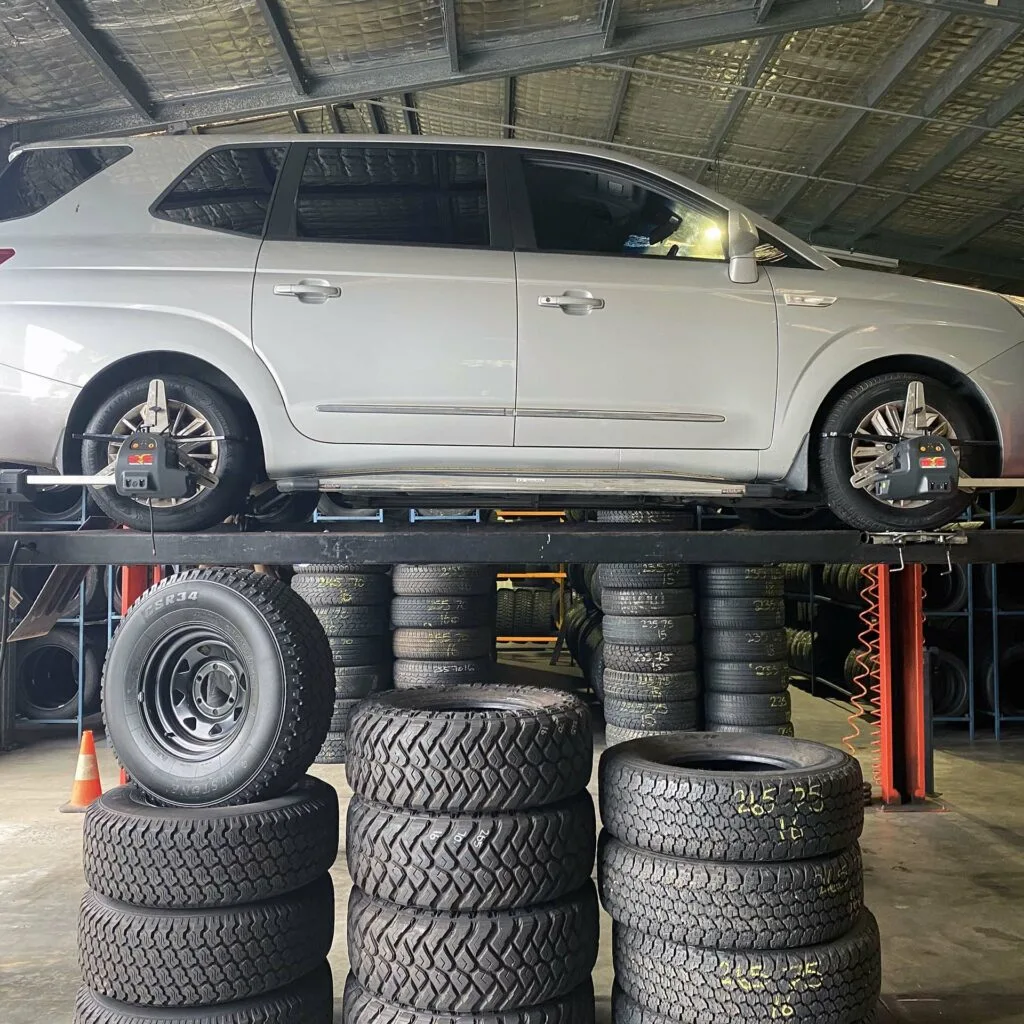
Wheel alignment involves checking and adjusting wheel and steering geometry against the relevant specifications. Bridgestone’s wheel alignment explanation describes the relationship between alignment, handling and tyre wear, including the effects that road impacts can have.
For a driver, the practical point is that alignment concerns how the wheels are positioned and work with the vehicle. It is not simply a process of adding weights to the wheel. If an alignment is recommended, ask the technician to explain what was checked and what needs adjustment.
You can also ask whether any other condition must be addressed before an adjustment will be useful. A sensible service conversation separates the inspection, the recommendation and the work authorised. It should not leave you guessing about what a line on the invoice represents.
What wheel balancing addresses
Wheel balancing addresses uneven weight distribution in the tyre and wheel assembly. Bridgestone’s wheel balancing guide explains the use of a balancing machine and counterweights. The purpose differs from setting wheel alignment angles.
When discussing balancing, ask which wheels are being checked and whether the quoted price includes the required work. If you are buying replacement tyres, ask the workshop to state whether balancing is included in the fitted price. Do not assume that every quote uses the same inclusions.
The distinction matters when comparing two offers. One price may cover fitting and balancing, while another includes an alignment assessment or additional work. A short written breakdown makes those differences visible and avoids treating unequal services as though they are the same.
Describe symptoms without trying to diagnose them
Unusual vibration, uneven wear or a change in steering should be described to a professional. They can have different causes, so avoid using a single symptom as proof that one service is required. If the vehicle feels unsafe, seek advice about safe recovery or assistance before driving it to a workshop.
Make a short note of when the issue appears: whether it is new, whether it is constant and whether anything happened before it started. Mention recent tyre replacement, wheel changes, a road impact or previous work if relevant. Only include observations you have actually made; there is no need to recreate a problem through risky driving.
If you have an earlier invoice or assessment, bring it along. Knowing what was done can help the workshop understand the sequence of events. Ask the team what information is useful before sending long descriptions or unrelated records.
What to ask when new tyres are fitted
When you are arranging new tyres or discussing nearly-new stock, ask how the fitting process is priced and what checks are recommended for your vehicle. Keep the supply of tyres, wheel balancing and alignment clearly identified.
A useful question is: “What is included in this fitted quote, and is there any separate assessment you recommend?” The answer should explain the proposed work and any additional charge. If the workshop discovers another issue after inspection, ask for the revised recommendation before authorising extra work.
Do not assume that a tyre replacement will resolve an unrelated vibration or steering concern. Tell the team about the concern at the beginning so it can be considered during the assessment. Our tyre quote preparation guide explains the vehicle details to have ready.
Build a maintenance record that is actually useful
Keeping a simple record can make later conversations easier. Note the date of the visit, the tyres fitted, the work carried out and the recommendations given. You do not need a complicated spreadsheet; a folder of clear invoices or notes is enough to establish a useful history.
If you are advised to return for a check, record the reason and the recommended timing. Ask whether the advice is based on the vehicle, the tyre manufacturer or a condition found during the visit. That helps you understand the purpose rather than following an unexplained reminder.
When the vehicle changes hands within a family, pass on the relevant records. The next driver should know what was done and what still needs attention. Avoid converting a workshop recommendation into a universal interval that may not apply to a different vehicle or tyre setup.
Prepare a clear workshop enquiry
Your first message can be straightforward: “I have a [vehicle]. I have noticed [specific issue] since [time or event]. The tyres were last changed or checked on [date if known]. Could you advise on an assessment and explain the likely next step?”
Include your preferred location and when you need the vehicle. If you are requesting a quote for several jobs, list them separately so the workshop can respond clearly. Ask about inspection charges and what needs to happen before the final cost can be confirmed.
The aim is an agreed process, not a remote diagnosis. An initial conversation may identify what to bring or how to arrange a visit, while the actual recommendation depends on examining the vehicle. This makes the enquiry more productive and reduces avoidable misunderstandings.
Arrange wheel care on the Gold Coast
Branigans lists wheel alignment and balancing among its workshop services. Contact the Burleigh Heads or Southport team to confirm availability for your vehicle and arrange an assessment.
Before collection, ask the team to explain the work completed and any remaining recommendations. If a concern has not been resolved, describe it clearly and discuss the next step. Keep the invoice with your vehicle records so future conversations start with the same facts.
Understanding alignment and balancing does not mean you need to specify the repair yourself. It means you can ask focused questions, understand the quote and make an informed decision. Contact Branigans to discuss what you have noticed and how the workshop can help.
Frequently asked questions
Does balancing include wheel alignment?
No. They are separate services. Ask your workshop to identify the work and inclusions in its quote.
Will an alignment fix every vibration?
No. Vibration can have more than one cause. Describe the issue and arrange an appropriate assessment.
Can I ask about alignment when replacing tyres?
Yes. Tell the workshop about any concerns and ask what checks it recommends for your vehicle.